How to Identify UK Wetland Birds by Sight and Sound
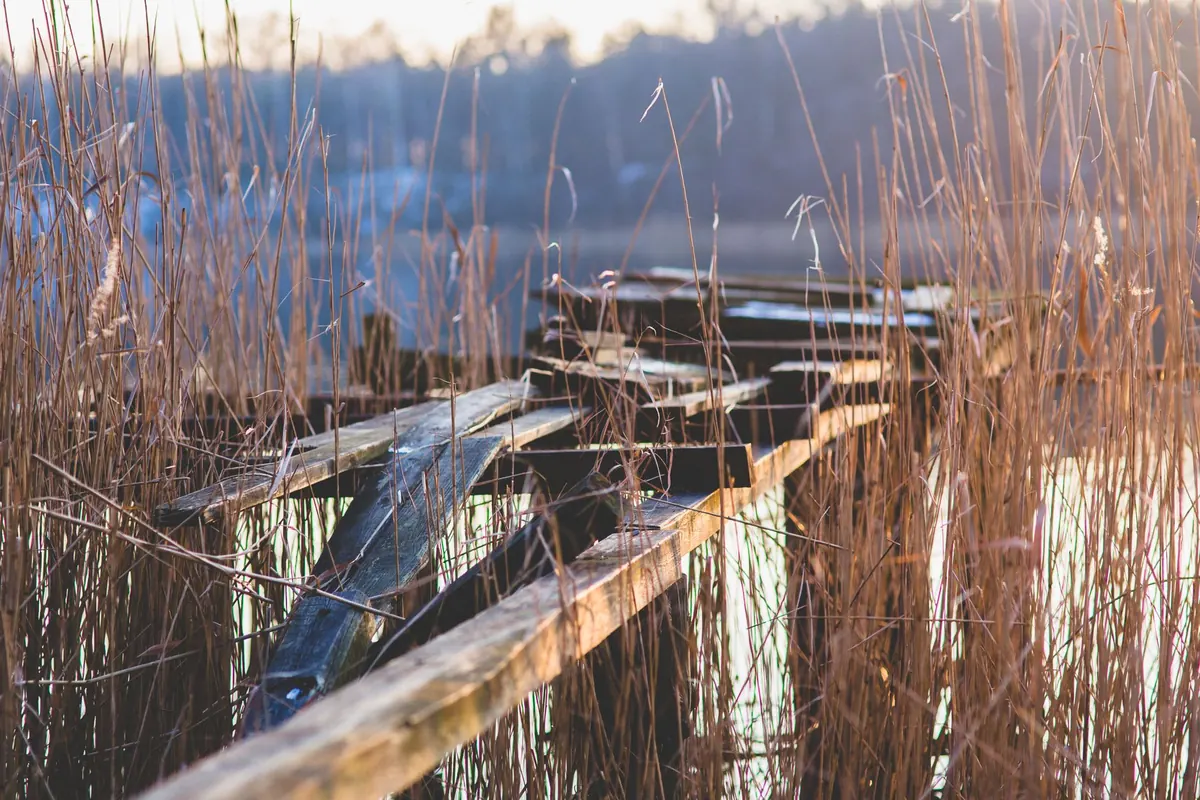
Reedbeds are deceptive. From the path, all you can see is a wall of green and brown stems shifting in the breeze, and all you can hear is a racket coming from somewhere inside it. The birds are there; they are simply hidden, and most will stay hidden however long you stare.
That is not a problem, it is the point. Wetland birding rewards a different set of habits: listening properly, learning a handful of unmistakable calls, and knowing which field marks matter when a bird finally shows itself.
Listen first: how to read a reedbed by ear
Sound is your main tool in a marsh. Reed stems scatter light and hide movement, but they do not block noise, and water carries a call further than you expect — a bird on the far side of a dyke can sound as if it is beside you.
Give yourself a proper listening stop. Stand still for two minutes, cup your hands behind your ears, and let the obvious noise settle. Most beginners hear four or five species at once and give up; the skill is separating one voice from the crowd.
- April to early June is the peak for song, and the first two hours after dawn are the best of the day.
- Bitterns boom most in still conditions from late winter into spring, often just before dawn and again at dusk.
- Anything above a light breeze flattens birdsong, so work the sheltered side of the reedbed.
- Learn two or three calls at a time. Thirty at once is how beginners end up learning none.
Four reedbed voices to know before anything else
Reed warbler
The song is rhythmic and mechanical: short phrases repeated at a steady beat, with a chugging, slightly nasal quality. The bird is plain — warm brown above, pale below, no streaks anywhere — with a long, thin bill and a flat forehead. It sings from deep inside the reeds and climbs stems rather than perching in the open. When alarmed, it gives a scolding, dry churr, often the first clue that a bird is nearby. Listen for the song’s clockwork regularity; Sedge Warbler, by contrast, is more varied and scratchy, with mimicked phrases thrown in.
Bittern
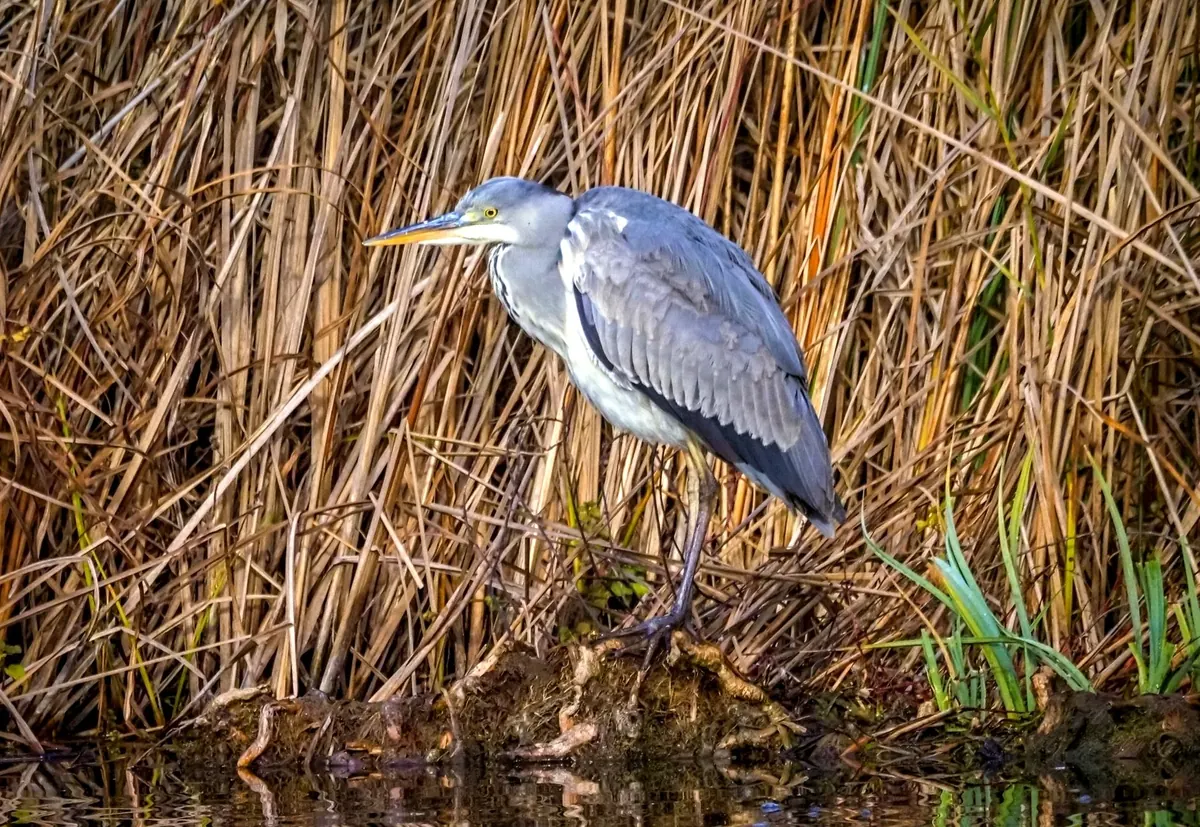
The boom is the sound of a reedbed in spring. It is a deep, resonant ooom that seems to come from the ground itself, more felt in the chest than heard. A male Bittern can boom several times in a row, then fall silent for minutes. The sound carries up to three miles on a still morning. Look for a stocky, heron-like bird with cryptic brown streaking, usually frozen at the edge of reeds or flying low with rounded wings and trailing legs. If you hear a boom, resist the urge to charge in; stay put, and you may see the bird in flight as it moves between pools.
Bearded Tit
Bearded Tits — properly called Bearded Reedlings — announce themselves with a metallic ping, like a tiny bell or a dropped coin. It is often given in flight, as small parties bounce low over the tops of the reeds. Listen for a series of pings moving across the reedbed, then watch for a brief flurry of tawny, long-tailed birds. The male has a grey head and a black “moustache”; the female is warmer brown and lacks the moustache. They are restless and rarely still, so learn the call and you will find them far more often than by sight alone.
Water Rail
The Water Rail is a master of concealment. Its most famous call is a pig-like squeal, a sudden, shocking kweeek that erupts from deep cover and makes beginners look for a struggling piglet. It also gives a quieter, rhythmic grunting and a soft chip. The bird itself is slender, with a long red bill, grey face, and barred flanks, but it usually stays in the shadows. The squeal is your best chance: note the direction, wait, and occasionally a bird will creep across a gap in the reeds.
When a bird shows: sight marks that matter
Sound gets you close, but identification often depends on a few seconds of visible field marks. In a reedbed, birds are usually seen in flight, perched briefly on a stem, or silhouetted against the water. Focus on shape, flight pattern, and one or two diagnostic features rather than trying to note everything at once.
- Marsh Harrier: broad wings, long tail, and a buoyant, harrier-like glide. Males are grey and black; females and young are chocolate-brown with a cream crown. They often quarter low over reeds, tilting from side to side.
- Reed Bunting: a small, streaky brown bird with a long, notched tail. Males in spring have a black head and a white collar; listen for a simple, repetitive tink-tink-tink from a stem top.
- Sedge Warbler: similar to Reed Warbler, but with a pale eyebrow stripe, streaked back, and a more erratic song full of mimicry. It prefers scrubby edges and nettle beds rather than pure reed.
- Kingfisher: not a reedbed specialist, but often seen as a blue flash over open water. Listen for a sharp, high peee as it flies past.
Use a scope if you have one, but keep it low and move slowly. A bird that flushes once may not show again. Patience, not magnification, is the real tool.
A simple practice routine for a reedbed visit
If you are new to wetland birding, a little structure turns a confusing wall of noise into a series of learnable puzzles. Try this on your next visit:
- Stand still for five minutes. Before you walk anywhere, listen. Let your ears adjust. Identify the loudest, most repetitive calls first.
- Pick two target species. Choose two from this article — perhaps Bittern and Bearded Tit — and focus on learning their calls only. Ignore everything else for now.
- Walk the sheltered edge. Wind kills sound. Stay on the leeward side of the reeds and stop every hundred metres.
- Watch for movement, not colour. Reedbed birds are mostly brown and buff. A flick of a stem or a low flight across a gap is a better clue than any bright plumage.
- Keep a log. After the visit, write down what you heard and saw. Note the time, weather, and wind direction. Patterns will emerge.
“The reedbed does not give up its secrets to the impatient. It rewards the listener who stays put.”
Over a season, you will build a mental library of voices. The boom of a Bittern will become as familiar as a blackbird’s song, and the ping of a Bearded Tit will pull your binoculars up before you have consciously registered the sound. That is the quiet pleasure of wetland birding: the moment when the hidden world finally speaks clearly.
Photo: Eric Planet Olympus / Pexels

Slot Volatility Explained: Why Your Bankroll Depends On It
Two players sit down at the same online slot, both with a $100 bankroll, both spinning at $1 a pull. One...

Volunteer Conservation on Wetland Trails: How to Join a Local Work Party
Practical conservation volunteering on wetland trails is sociable, useful and easier to start than you...
About Us