Binoculars vs Spotting Scopes for Wetland Wildlife Watching
Half an hour before sunrise the reedbed is still black, and somewhere in the middle of it a bittern booms. You can hear it. You cannot see it. That is usually the moment people start wondering whether their binoculars are enough.
Binoculars and spotting scopes both belong on a wetland, and neither is the wrong answer. They do different jobs, and the choice comes down to three practical things: how far you walk, how far the birds are, and what you can comfortably spend.
What Each Optic Does Best
Binoculars give you a wide, bright, two-eyed view. Most birders settle somewhere between 7x and 10x, with 8x42 the classic all-rounder: enough magnification to identify a lapwing in flight, a wide enough field of view to find a warbler in a hawthorn, and a bright enough image at dawn when the light is poor.
A spotting scope trades all of that for reach. Most run from around 20x to 60x on a zoom eyepiece and must sit on a tripod. One eye, narrow field of view, no quick swing from reedbed to sky. In exchange, a bird 300 metres out across open water becomes something you can study properly: plumage detail, feeding behaviour, the colour of a leg ring.
A useful way to think about it: binoculars answer what is that? A scope answers what exactly is that doing?
On a wetland, that distinction shows up constantly. A marsh harrier quartering low over the reeds is a binocular bird: it appears, tilts, disappears, and you need to follow it. A flock of black-tailed godwits on a far mudbank is a scope bird: they are not going anywhere, and the difference between one species and another may hang on the length of a bill or the pattern on a wing.
Portability, Mud and the Reality of a Wetland Trail
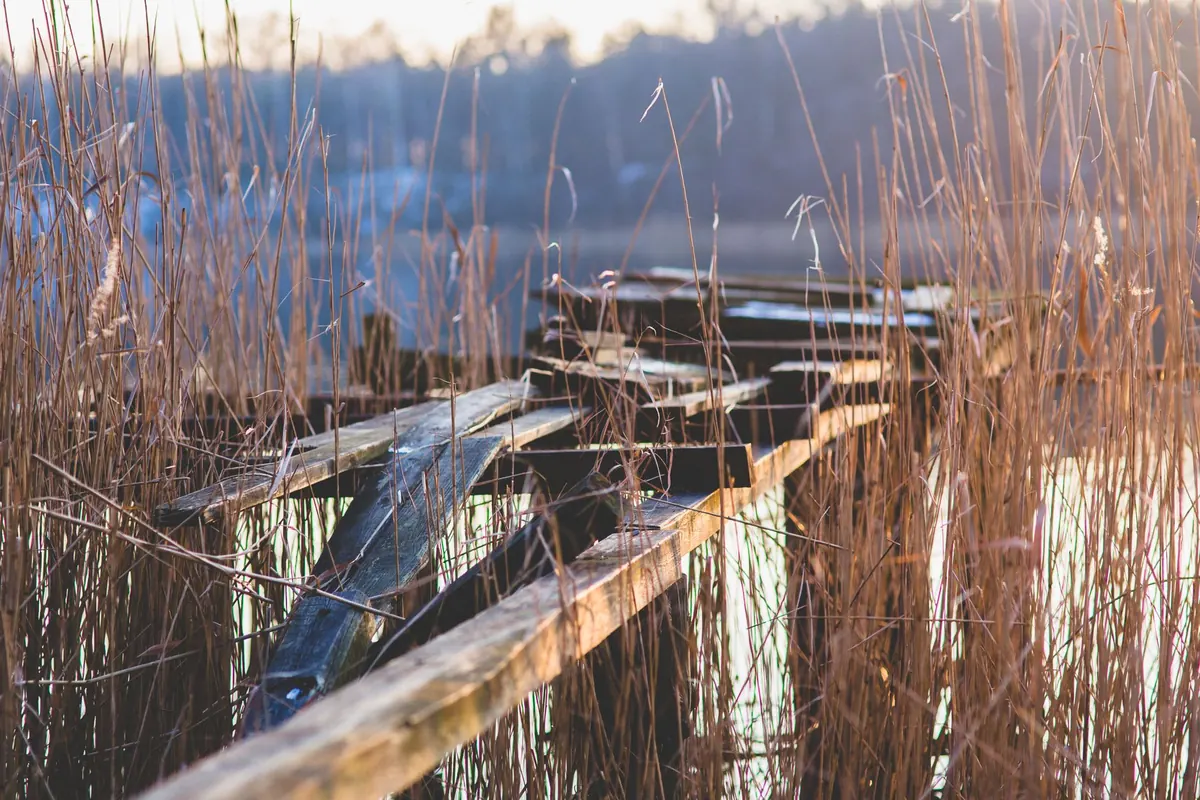
Wetland trails are rarely smooth. Boardwalk, then grass, then a muddy bank; gates, stiles, slippery planks and a wind coming straight off the water.
A pair of 8x42 binoculars weighs roughly 600 to 800 grams and hangs on a harness, ready in two seconds. A scope body is often 1.5 kg or more, and a tripod and head add several kilos on top. Every time you want a look you stop, unclip, extend the legs, level it, and hope the breeze has not risen. Then you pack it all away again.
That friction adds up over a two-hour walk, and the best optic is always the one you actually carry. A scope left at home because it was too much bother on a Tuesday morning helps nobody.
Where scopes come into their own is from a hide. An angled eyepiece sits comfortably on a window ledge, and a bean bag or clamp can replace the tripod entirely. If most of your marsh watching happens from a seated position, the calculation changes completely.
There is also the question of what else you are carrying. A scope competes for space with a flask, a rain jacket, a camera, and perhaps a child or a dog. Binoculars do not. If you are walking a reserve with family, or stopping every few minutes to check a field guide, the lighter option usually wins by default.
Magnification Is Not the Same as Detail
It is tempting to assume that more magnification means more bird. Out on a marsh, it often does not.
Warm afternoons produce heat shimmer over open water, and at 40x you are magnifying a wobbling soup of air rather than a gull. Wind does the same to a tripod-mounted scope. A narrow field of view is also hard work when a bird is moving through reeds, because once you lose it you may spend a minute finding it again.
Use the least magnification that gets the job done. For most distances on a reserve trail, a steady pair of 10x binoculars with your elbows braced on a rail resolves a great deal. Save the high end for distant, still subjects in clean air: waders on a far sandbank, a raptor on a post across the reedbed, roosting wildfowl counted at dusk.
Light matters just as much. At dawn and dusk, when wetland wildlife is most active, a scope's higher magnification can actually make the image dimmer and harder to interpret. A good 8x42 will keep working when a 60x zoom has turned to grey mush. This is why many experienced marsh watchers reach for binoculars first and the scope second, not the other way around.
If you only ever own one optic for the marsh, make it good binoculars in the 8x to 10x range, and add a scope later if you keep wishing for more reach.
Where the Money Goes
Specification sheets tell only part of the story. Two pairs of 10x42 can perform very differently in the field. What generally matters:
- Glass and coatings. Fully multi-coated lenses, and in better binoculars extra-low dispersion (ED) glass, which reduces the coloured fringing around a bird against a bright sky.
- Prisms. Roof-prism binoculars are slimmer and more rugged; porro-prism models can offer excellent value but are bulkier. In scopes, a good prism and a smooth focus wheel matter more than a long list of numbers.
- Eyepiece and eye relief. If you wear glasses, check that you can see the full field of view without pressing the lenses against your spectacles. Long eye relief is worth more than an extra 2x.
- Weather sealing. A wetland is a wet place. Nitrogen-purged, waterproof optics will survive drizzle, spray, and the inevitable dunking of a hand or a wader boot.
- The tripod, if you go the scope route. A cheap tripod on a windy hide ledge is worse than no tripod at all. Budget for a sturdy head and legs, or plan to use a bean bag.
Matching the Optic to the Day
Many wetland birders end up with both, but they do not carry both every time. The decision is easier if you ask what kind of day it is.
- A long walk with no hides. Binoculars only. Portability and speed of use win.
- A morning in a hide over open water. Take the scope. This is what it was made for.
- A mixed day of trail and hide. Binoculars on a harness, scope in the car or at the visitor centre if the reserve offers loan scopes.
- Dawn or dusk. Binoculars. Brightness and field of view beat magnification.
- Midday, clear air, distant waders. Scope. Heat shimmer is the enemy, but early or late it can be superb.
If you are buying your first serious optic for wetlands, start with binoculars. They are the tool you will use for the majority of sightings, from a kingfisher flashing along a dyke to a snipe flushed from the margins. A scope is a specialist instrument, and a wonderful one, but it is not the foundation of a wetland kit.
Go to a reserve, borrow what you can, and spend an hour watching real birds in real light. The reedbed will tell you what you need. The bittern may still not show itself, but at least you will know why you are waiting.
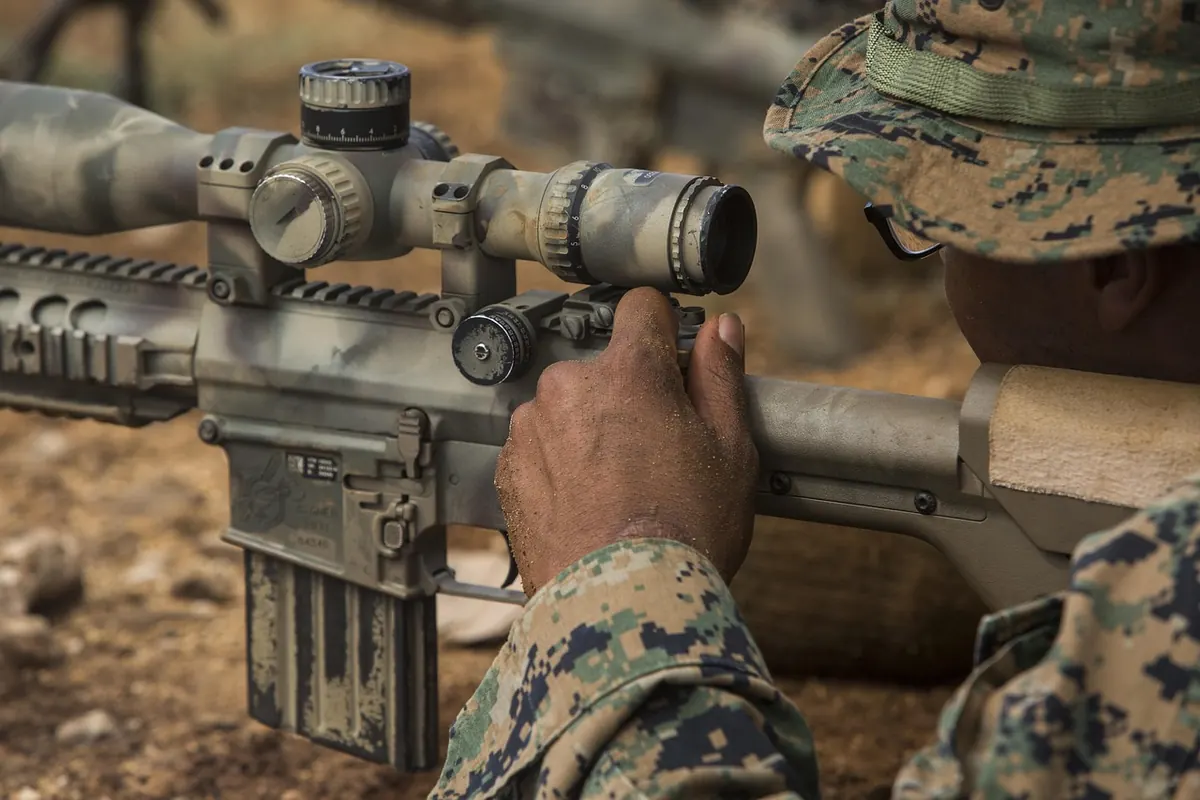
Photo: Military_Material / Pixabay
Slot Volatility Explained: Why Your Bankroll Depends On It
Two players sit down at the same online slot, both with a $100 bankroll, both spinning at $1 a pull. One...

Volunteer Conservation on Wetland Trails: How to Join a Local Work Party
Practical conservation volunteering on wetland trails is sociable, useful and easier to start than you...
About Us