
Volunteer Conservation on Wetland Trails: How to Join a Local Work Party
Walk a marsh trail in February and you might meet a line of people in waterproofs, strung out along a dyke with bow saws and loppers, a Thermos flask parked on a plank. They are not a paid ground crew. They are a work party: local volunteers who turn up once or twice a month to keep a wetland path walkable and the habitat behind it healthy.
Boardwalks rot. Ditches silt. Willow and birch creep in and quietly dry out a fen that took centuries to form. None of that gets fixed by good intentions alone. If you have ever finished a walk across a reserve and wondered who keeps it that way, practical conservation volunteering is the answer — and joining in is less complicated than most people assume.
What the Work Actually Involves
Wetland conservation volunteering is mostly manual, mostly outdoors and almost entirely learnable on the job. No experience is needed, though a willingness to be outside in February helps. A site warden or an experienced volunteer leader will meet the group, explain the plan, hand out tools and run through a short safety briefing before anyone starts.
The work follows the seasons. Winter is the cutting season: vegetation is dormant and the ground is often soft, so the jobs that need machinery or muscle tend to happen then. Summer leans towards access — clearing paths, cutting back overhanging branches, checking steps and handrails — along with surveying and tackling invasive plants. Expect a steady pace and a proper tea break. Leaders would far rather you worked four hours and came back next month than burned out by eleven.
The Jobs You Might Be Given a Tool For
Tasks vary from site to site, but the staples of lowland wetland work are fairly consistent:
- Cutting and coppicing willow, alder and birch to stop scrub shading out reedbed and fen.
- Clearing silt and vegetation from ditches and shallow channels so water levels can be managed.
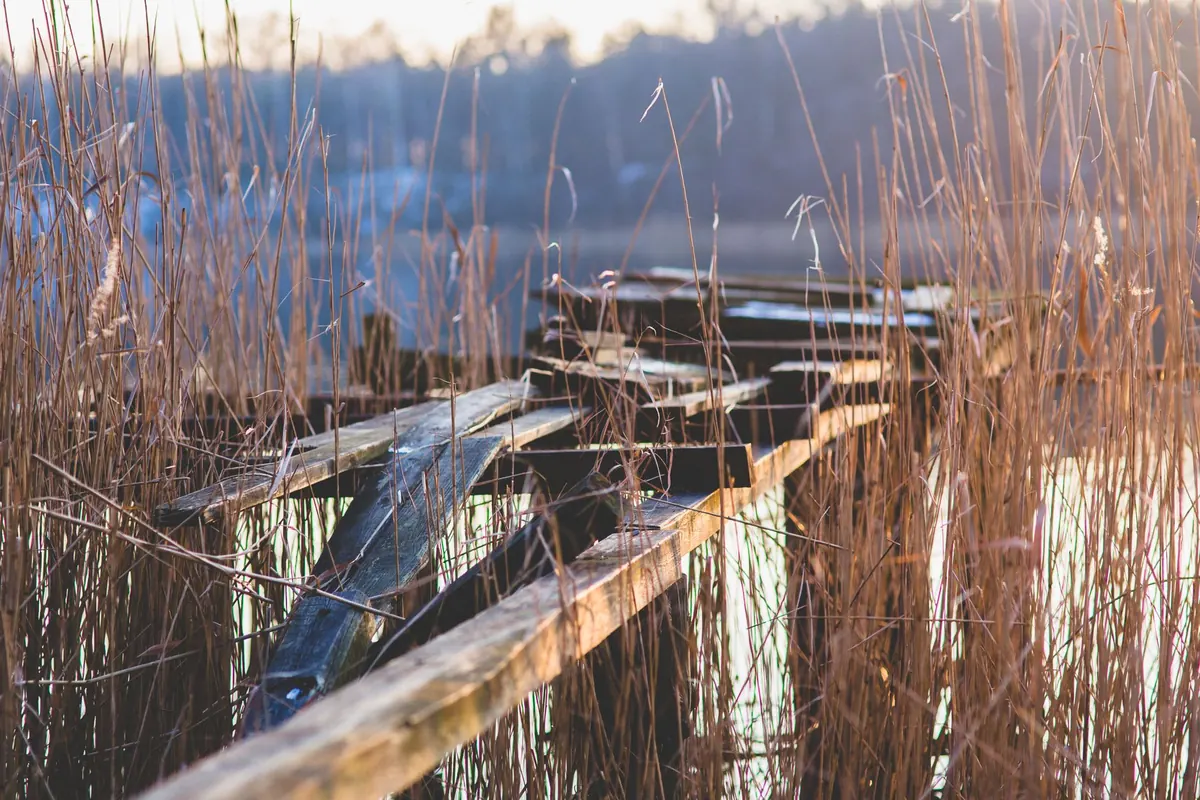
- Replacing boardwalk planks, handrails and steps, and treating timber before it goes soft.
- Repairing fences, gates and stiles — especially where grazing animals are used to manage a site.
- Raking and carting off cut meadow grass so nutrients don't build up and coarsen the sward.
- Pulling invasive species such as Himalayan balsam before it sets seed.
- Litter picking and removing fly-tipped rubbish, which is grim work and oddly satisfying.
- Simple wildlife recording: counting birds, noting plants, logging what lives in a pond.
Finding a Group Near You
Almost every wetland in the UK is looked after by someone who would welcome another pair of hands. Good places to start:
- Your county or country wildlife trust. Most run regular work parties and list them online; an email to the volunteering team usually gets a reply within a few days.
- The national bodies — the RSPB, National Trust, Woodland Trust and Canal & River Trust all run volunteer days on wetland and waterside sites.
- Your council's countryside ranger service, which often runs practical tasks on smaller urban marshes and nature reserves.
- Rivers trusts and catchment partnerships, which work on the streams and brooks feeding a marsh.
- Friends-of groups attached to a particular park or common. These are often the friendliest and least bureaucratic, and they advertise on noticeboards, parish newsletters and local Facebook groups.
- The Conservation Volunteers (TCV), which runs practical sessions and Green Gym projects in many towns and cities.
Before you commit, ask three things: what the group provides, exactly where to meet, and what the day usually involves. If you have access needs or a health condition, say so early. Good leaders would rather plan around you than find out on the morning.
Preparing for Your First Day
You do not need specialist kit, and you should not buy any until you have been once. Wear clothes you don't mind getting muddy, in layers, and bring:
- A waterproof jacket and, ideally, waterproof trousers.
- Sturdy boots with grip. Wellies are useful on genuinely wet ground but rub on long walks.
- Work or gardening gloves, plus a spare pair.
- A flask, water and a packed lunch; snacks keep you going.
- Sun cream and a hat in summer, insect repellent for damp summer evenings.
- Any medication you might need, and emergency contact details.
- A change of footwear and a bag for wet clothes in the boot of the car.
If you have a heart condition, asthma, back trouble or anything else that might make a day of physical work risky, speak to your GP first and mention it to the group leader. That is not a reason to stay at home — most tasks can be adapted — but the leader needs to know.
What Happens on the Day
Turn up a few minutes early. There is usually a briefing: the plan, the safety points, where the nearest help is, who carries the first aid kit. Tools are handed out and often carried some distance to the work site. From there you'll be in a pair or a small group, with someone who knows what they are doing within shouting distance.
Pace yourself. Take the breaks. Ask why a task is being done — why that willow is coming out, why the grass is raked off rather than left — because the reasoning is the interesting part, and leaders enjoy explaining it. Cleaning and returning tools at the end is part of the day, not an afterthought.
Getting Started This Month
Pick a wetland you already walk. Look at its website for a volunteering or events page, then send one short email: you would like to join a work party, you are free on particular days, and what should you bring? Book a single date rather than promising every month. Go once, see how your back and your boots hold up, and decide afterwards whether it suits you.
And if spades and bow saws are not your thing, say so. Work parties need people who can make tea, take photographs, keep records, run the social media account or lead a gentle walk just as much as they need diggers. The trail you walked last weekend is maintained by people who started exactly where you are now.

Slot Volatility Explained: Why Your Bankroll Depends On It
Two players sit down at the same online slot, both with a $100 bankroll, both spinning at $1 a pull. One...
How to Photograph Wetland Wildlife Without Disturbing It
Ethical fieldcraft for wetland photography: how to read bird behaviour, choose the right lens, and use...
About Us