Beginner's Guide to Wetland Trail Walking: What to Wear and Take
Wetland trails are forgiving in every way except one: they are wet. The ground is soft, the wind has nothing to slow it down, and rain on open marsh seems to arrive sideways. Get your kit roughly right, though, and a walk through reeds and flooded grazing marsh is one of the most comfortable days out you can have.
Most of what follows is not specialist gear. It is ordinary stuff, chosen with a bit of thought and packed in the right order. Here is what to wear and take on a first wetland trail walk.
What makes wetland walking different
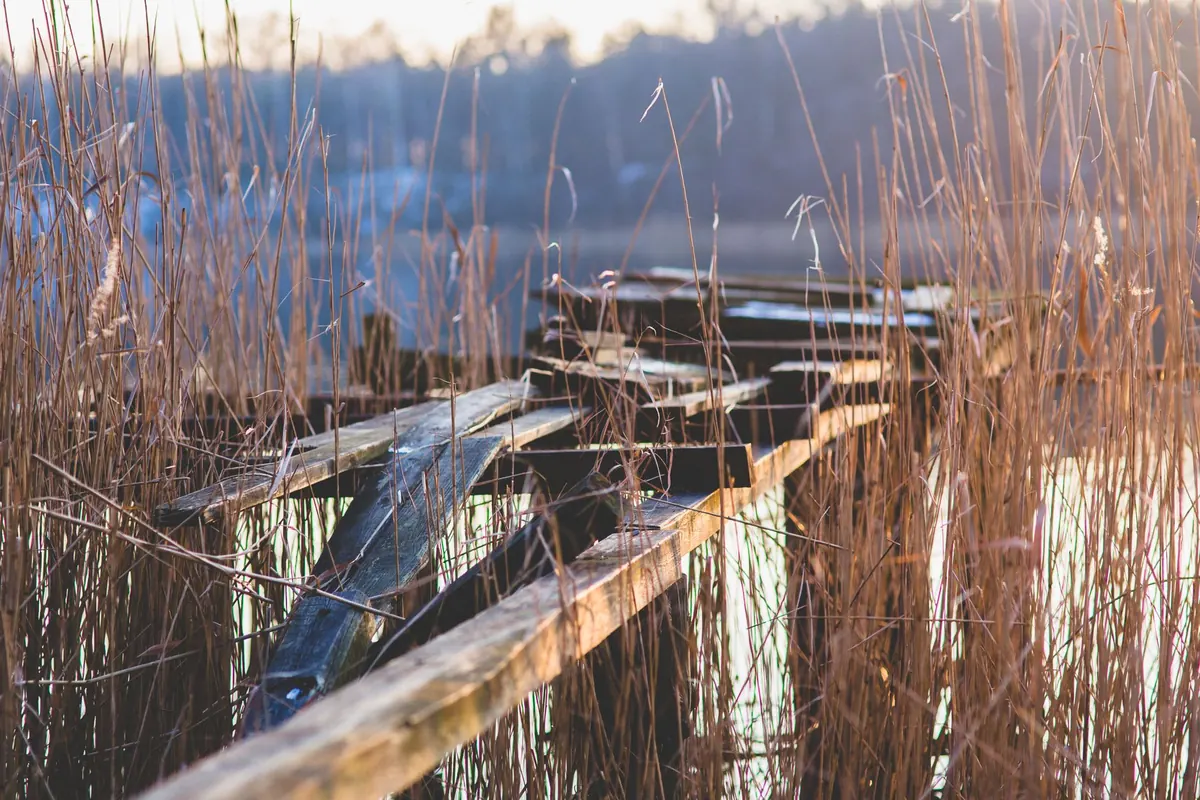
An upland path asks for fitness. A wetland path asks for preparation. The route might be a flat mile along a dyke top, but the surface underfoot changes constantly: compacted gravel at the car park, slippery clay at the gate, then planks, then mud, then water. Boardwalk timber grows a film of algae that behaves like ice in the wet.
Two other things shape what you wear. Open marsh offers no shelter, so a shower is something you walk through rather than hide from. And gates, step-over stiles and narrow bridges mean you stop and start a lot, which plays havoc with body temperature. Tidal sections can be genuinely cut off, and many reserves close or divert paths between spring and late summer for nesting birds. Check tide times, the reserve's own notices and the forecast before you leave, not on arrival.
There is a simple habit worth adopting first.
Assume your feet will get wet and your legs will get muddy, and pack for that rather than hoping otherwise.
Footwear: the one place not to economise
Boots matter more here than anything else in your kit. Trainers with mesh uppers soak through in minutes and then stay wet, which is cold, heavy and a fine way to ruin a day.
For most people, on most wetland trails, waterproof walking boots with a decent tread are the answer. Mid-height boots give some ankle support on tussocky ground and cope with shallow puddles and wet grass. If your walk is mostly surfaced path and boardwalk in summer, a sturdy trail shoe with a deep lug pattern works well — it dries faster than a boot and weighs less.
Wellington boots come into their own on flooded grazing marsh, where water is ankle-deep for a hundred metres and no boot will cope. Their limitation is distance: on gravel and tarmac they offer little support and rub. Neoprene-lined pairs are warmer in winter, which matters more than you would think on a flat walk with no climbs to warm you up.
A few practical points:
- Choose boots with room in the toe box for thick socks, but a firm hold at the heel so your foot does not slide forward.
- Wear one pair of merino or synthetic socks, not two cotton ones. Cotton holds water against the skin.
- Pack spare socks in a dry bag. Dry feet at the halfway point feel like a small holiday.
- Gaiters are worth the faff on reedy, dew-soaked paths, and cheap ones do the job.
- Scrape mud out of your tread before it sets. Caked soles lose most of their grip.
Layering: dress for the effort, not the forecast
You will be warmer than you expect. Flat walking on soft ground is steady work, and the wind-free stretches between hedges and reedbeds can feel almost still. Then you stop to look at something, and within two minutes you are cold.
Base layer
A synthetic or merino top, long-sleeved in spring and autumn. Cotton T-shirts hold sweat and chill you the moment you slow down.
Mid layer
A thin fleece or light synthetic jacket that packs down small. Two thin layers are more useful than one thick one, because you can fine-tune as you go.
Outer layer
Your waterproof goes over everything and comes off when you warm up. Trousers, hat and thin gloves complete the system. A buff or light scarf is surprisingly welcome on an exposed sea wall.
Waterproofs: read the label rather than the marketing
Shower-resistant is not waterproof. Look for a jacket with taped seams and a hood that stays up in wind; a hood that flops back fills with water and runs down your neck. Waterproof trousers are the piece most people leave behind and most people wish they had brought. Choose a pair you can pull on over muddy boots without taking them off.
Fabric performance fades with dirt and washing. A wash-in or spray-on reproofer restores the beading and costs very little. Inside your pack, put anything that must stay dry — phone, spare layer, spare socks, map — in a dry bag or a heavy-duty freezer bag. Wetland rain finds every gap.
What to carry in a day pack
A 20 to 25 litre pack is plenty for a half day. Keep the weight low and the essentials easy to reach.
- Spare mid-layer and socks in a dry bag
- Waterproof trousers
- Hat, thin gloves and a spare buff in winter
- At least a litre of water for a half-day walk, more in warm weather; a flask of something hot in winter
- Snacks — flapjack, nuts, a sandwich; a marsh bench is a fine place for lunch
- Map and compass, or a charged phone with an offline map downloaded
- Small first aid kit, including fine-tipped tweezers or a tick tool
- Midge repellent in summer, sun cream and sunglasses for glare off open water
- Head torch in winter, and a small sit mat if you plan to linger in a hide
- A carrier bag for muddy boots, and a cloth or small towel
Ticks are common in rough grass and reeds. Remove one promptly with fine-tipped tweezers or a proper tick tool, clean the area, and speak to a pharmacist or GP if you are worried or a rash appears.
Turn back sooner than you think you need to
Wetland walks are not the place for heroics. If water is going over the top of your boots, if the wind is pushing you sideways along a sea wall, or if the light is going and you still have a mile of boardwalk ahead, turn around. The path will be there next weekend.
For a first outing, pick a loop of two to four miles, ideally one with a short option to cut it back. Allow twice the time you would give the same distance on a pavement — soft ground and stopping to watch birds both slow you down. Tell someone where you are going and when you expect to be back. Keep to marked paths and boardwalks, keep dogs on leads where livestock or nesting birds are present, and take everything home with you.
Back at the car, scrape off the mud, tip the water out of your boots and dry them slowly. Stuff them with newspaper and keep them away from radiators, which harden leather and warp soles. Then check the forecast, because the second walk is usually better than the first.
Photo: KELLEPICS / Pixabay

Slot Volatility Explained: Why Your Bankroll Depends On It
Two players sit down at the same online slot, both with a $100 bankroll, both spinning at $1 a pull. One...

Volunteer Conservation on Wetland Trails: How to Join a Local Work Party
Practical conservation volunteering on wetland trails is sociable, useful and easier to start than you...
About Us